


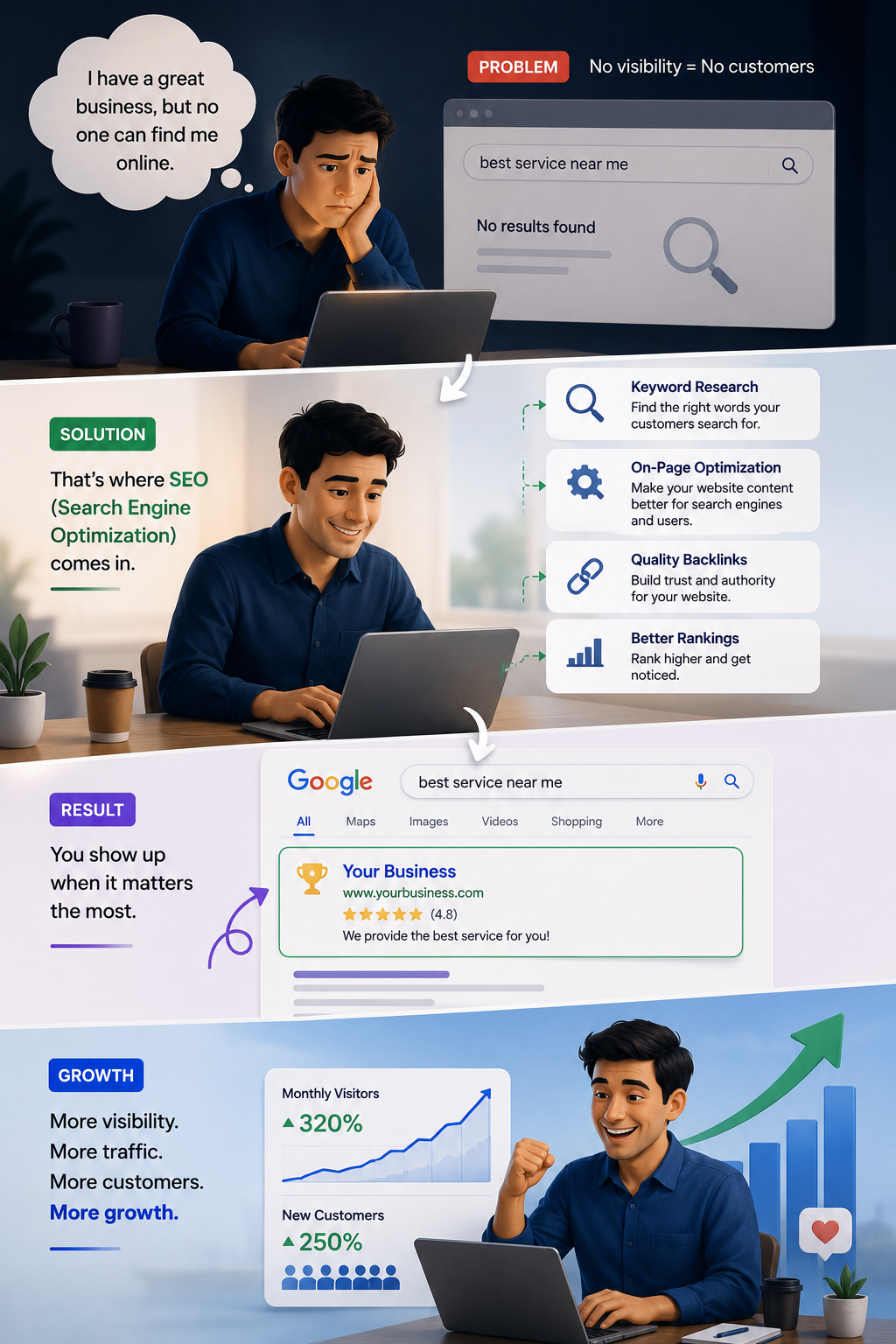
SEO — Search Engine Optimization — is the practice of shaping a website so that search engines like Google can understand it, trust it, and rank it for the terms your customers are actually typing in. Done well, it turns search into a steady, compounding source of customers instead of a one-off lucky click.
How search engines decide what to show
Search engines crawl the web, index what they find, and rank pages for a given query based on hundreds of signals — relevance, page speed, mobile usability, content depth, and how many other reputable sites link to yours. None of this is random; it's a consistent (if constantly evolving) set of rules you can design for.
The three pillars of SEO
- Technical SEO — site speed, mobile-friendliness, crawlability and structured data that helps search engines parse your pages correctly
- On-page SEO — content quality, keyword relevance, headings and internal linking that make each page clearly about something
- Off-page SEO — backlinks, reviews and citations that build the reputation search engines use as a trust signal
Why it matters more than a single ad campaign
Paid ads stop the moment you stop paying. SEO compounds — a page that ranks well keeps bringing in visitors months and years after it was published, at zero marginal cost per click. It's slower to build than a paid campaign, but it becomes one of the cheapest, most durable channels a business has.
For most businesses, the real question isn't whether to invest in SEO — it's whether to start now, while competitors are still treating it as optional, or later, once catching up is a lot more expensive.
Have a project in mind?
Let's talk through scope and get you a fixed quote.